

Our Mission

Our Dream
Our Design

Educate - Encourage - Enable
Numbers at a Glance

800+
MBAs who have taken our electives
25
Students became Arrow Scholars since 2023
60+
Scholars and stewards part of our community
29
Progress Medals given since 2016In The Spotlight

How Talent Can Thrive in an AI-Driven World
Soft skills and integrated ecosystems are crucial for success in this age of disruption.In this era of "permacrisis" and constant disruption, adaptability and resilience are vital traits that require collaboration and an increasing focus on human-centric skills. That’s the messaging to come out of the 2025 Global Talent Competitiveness Index (GTCI), an annual report that highlights the latest talent trends and offers insights into the current global talent landscape.
Read More 
When Brain Scans Beat Surveys (and When They Don’t)
Brain imaging and consumer surveys predict different stages of the purchase journey – a distinction that can make or break a product launch.A food company spends months and significant budget on consumer research before launching a new product. The survey scores are strong, and so the store managers stock it. Six months later, the product is quietly pulled from the shelves. The consumers who said they would buy it did not. This pattern – confident pre-launch research followed by disappointing sales – is one of the most persistent and costly problems in marketing. Our research investigates whether brain imaging data can offer something traditional methods can’t: a more accurate window into what consumers will do, rather than what they say they will do.
Read More 
Five Global Trends in Business and Society in 2026
At the World Economic Forum Annual Meeting in Davos in January, Canadian Prime Minister Mark Carney’s sobering speech warned that “we are in the midst of a rupture, not a transition”.This sombre outlook was mirrored in the WEF’s Global Risks Report 2026, released a week prior to Davos. In it, 50 percent of some 1,300 global experts expressed a pessimistic world outlook over the next two years. The report named geopolitical, economic and technological risks as issues to watch for in the short term and warned that environmental concerns are being forced to take a back seat due to these more urgent concerns.
Read More 
What the Next AI Revolution May Look Like
There is a particular pleasure in dialoguing with someone who has spent more than a decade building a potential game-changer and is now on the cusp of success. That was the backdrop of my chat with Yann LeCun onstage at INSEAD’s recent AI Forum Europe, shortly after he left Meta to found Advanced Machine Intelligence (AMI Labs), a new venture headquartered in Paris.
Read More 
How Nature Nudges Us to Eat Better
What really shapes our food choices, and why brands keep getting it wrong.People who eat healthily don’t have that much more willpower. They have just engineered their environment to avoid having to resist temptation.
Read More 
The Courage to Tackle Fear as a Leader
Fear is inevitable in leadership. The weight of responsibility for an organisation’s performance and the livelihood of its people, especially in times when the next crisis is never too far away, can feel overwhelming. The question is how leaders should respond to fear.
Read More 
Is Your Board Stuck in the Wrong Gear?
Effective boards shift between passive, mentor, partner and control modes to optimise engagement.The Covid-19 pandemic unexpectedly prompted a much-needed change in boardrooms. Many boards, once content to simply sign off on decisions, were forced to collaborate closely with management to navigate the crisis. They shifted from a passive, backseat approach to one of active engagement, providing more feedback and advice, or even getting involved with decision-making.
Read More 
INSEAD Explains Sustainability: Nutrition and Health
From the number one global health issue of obesity to climate change and ethical animal welfare, INSEAD Professor of Marketing Pierre Chandon explores the multiple challenges currently facing the global food industry.While governments can help through regulations, he argues that it is up to businesses to devise smarter ways to improve consumer health. Marketers have an important role to play because they understand the needs of the different stakeholders. This puts them in a prime position to help find solutions that offer a triple win for sustainability, for the consumer and for the company.
Read More 
When Nutrition Labels Work – and When They Don't
At-a-glance nutrition labels on restaurant menus can promote healthier choices among middle-class consumers. But what about the rest?Imagine walking into a quick-service restaurant where every item – main, side, beverage and dessert – displays a simple colour-coded grade indicating its nutritional quality. Would this information make you order healthier food?
Read More 
Five Ways to Innovate for Sustainability
Companies that view sustainability as a source of innovation rather than a compliance problem open new paths for growth.Companies are setting ambitious sustainability goals at a time when many of the needed solutions do not yet exist. The firms that make real progress treat sustainability as an opportunity for innovation and growth, not a compliance burden. This shift forces leaders to rethink how they design products and run the business. It also exposes tensions between green goals and the usual measures of success.
Read More 
New Book Exposes ‘Wedge’ Between Performance and Progress
For too long, business has prioritised performance at the expense of societal progress – be it fairness, well-being or sustainability.A new book, edited by Subramanian Rangan, Professor of Strategy and Management at INSEAD, explores how flawed assumptions in business theory are cleaving apart performance and progress.
Read more 
The Economics of Sustainability
Is it really possible for a profit-driven organisation to be sustainable? This existential question may well be keeping leaders awake at night amid pressure from consumers, regulators and investors – and potentially their own conscience. Today’s challenging economic climate is certainly making this question more acute than ever.
Read more 
Sustainability as a Business-Model Transformation
Many global companies have made public commitments to sustainability targets. Fulfilling these commitments will require firms to transform their business models and organizational architectures. A few pioneers are leading the way, demonstrating that companies can make sustainability not only a goal but also the driver of their business model. They are leveraging what they’ve learned from developing innovation capabilities to help them on their sustainability journey. This article identifies three fundamental tensions that companies must address. First, they need to maintain a long-term sustainability vision while delivering on short-term financial targets. Second, they must introduce systemwide change while keeping their employees engaged at the local level. And third, they have to be open to external collaboration while maintaining strong internal integration. Drawing on real-world examples such as the Italian energy group Enel and Swiss cement giant Holcim Group, the authors describe the practices companies can use to face each challenge with intention
Read more 
Business Practice Gone Astray? Improve Business Theory
Flawed assumptions in business theory are pushing firms off course.What’s common across the Boeing 737 MAX debacle, the 1MDB financial scandal and America’s opioid crisis? They are all illustrations of how business leaders, in pursuit of performance, neglected and undermined progress – specifically fairness, well-being and sustainability.
Read more 
Thoughtful Consumption: The “Last Mile” in Well-Being and Sustainability
Understanding consumer behaviour is key to making fashion more sustainable.Fashion, one of the most unsustainable industries on Earth, has long grappled with its damaging environmental and social impact. Consumers, on the other hand, tend to act like passive bystanders at a crime scene, placing the blame solely on brands and producers. While companies and executives face mounting pressure to adopt sustainable practices, consumers need to recognise that they are actively complicit in the very same crime.
Read more 
Why Do Governments So Often Disappoint?
Notwithstanding serious effort and dedication, so often there is a shortfall between peoples' expectations of government and what government delivers. At a recent symposium on government and progress, participants explored why and suggested that a new social contract is needed between public leaders and citizens.
Read more 
Governing in an Age of Great Expectations
Government matters for societal progress and will always do so. In which ways and to what extent depends on the social contract.There is little doubt that society is in a new age. The 20th century, characterised by the dramatic convergence of countries from colonialism toward development, has entered a new era where progress takes another shape entirely. The engine of development has been fuelled by the market-oriented practices of resource allocation, which has pulled many out of poverty. But the most powerful actor remains government, which is depended on to regulate such markets, provide infrastructure, security, healthcare and education. It has even come to stand as a powerful buffer between markets and society.
Read more Our Donors
The INSEAD Progress Initiative is founded thanks to a generous gift from Suzano, the leading pulp and paper producer headquartered in Brazil. Founded in 1924 by Leon Feffer, the firm has grown on the back of pioneering innovation and internationalization. This gift commemorates Suzano's centenary.
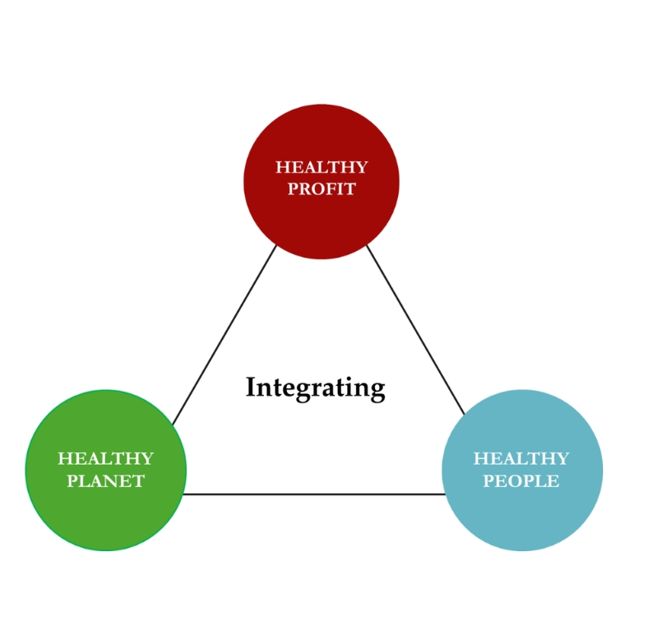
Suzano and INSEAD share a belief in the power of business to integrate profit, people, and planet. The firm is keen to support scholarship that can enlighten and educate the next generation of business leaders worldwide on the challenge of integration.
The IPI expresses profound appreciation to Suzano and the Feffer family.

