


In large organisations, improvement often comes through optimisation. Processes are refined, efficiencies gained, and performance steadily enhanced. Over time, however, this focus on doing things better can make it harder to step back and ask a more fundamental question: are we creating new value, or simply competing more effectively in existing spaces?
For Sriram Ramanujam, Vice President for Digital Products, Regional IT Southeast Asia at PSA Corporation Ltd, this question became increasingly relevant.
“In my current role, we are always looking at optimisation and execution. I wanted to challenge myself to think differently and explore how we could create new value rather than just improve what already exists,” he shares.
That desire to rethink value creation led him to INSEAD’s Blue Ocean Strategy programme.
Why Blue Ocean Strategy, at this stage of his career
Sriram leads a 240-strong team across Port, Ecosystem and Enterprise domains, responsible for digital products and platforms aligned with PSA’s business strategy. His work involves complex ecosystems, multiple stakeholders and large-scale operations, environments where competition is intense and constraints are real.
Although familiar with the concept of Blue Ocean Strategy, he initially questioned how applicable it would be in such settings.
“I had heard about Blue Ocean Strategy before, but I was curious about how practical it really was, especially for large organisations with legacy systems and operational constraints,” he explains.
Rather than looking for a one-off innovation exercise, Sriram wanted a structured way to rethink strategy and value creation in a disciplined and repeatable manner.
“I signed up because I wanted to understand how the Blue Ocean concepts could be applied in real organisational contexts, not just in theory.”
Turning ambitious ideas into structured thinking
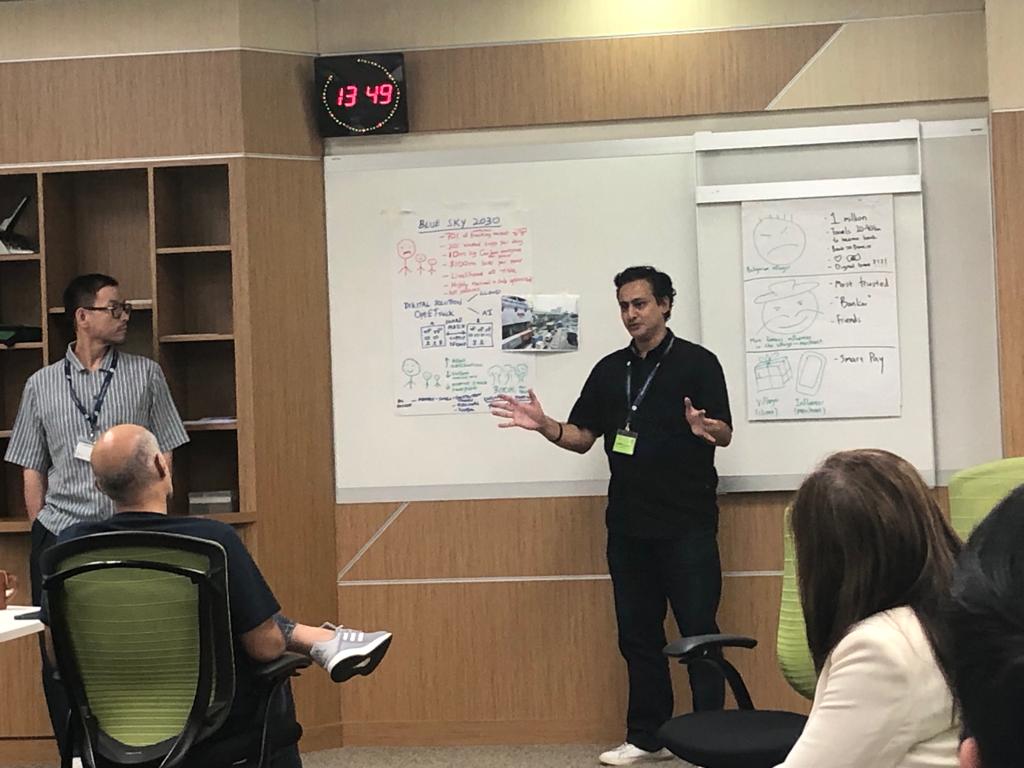
One of the programme’s strongest impacts for Sriram was how it translated ambitious thinking into clear strategic choices.
“The frameworks helped bring structure to the thinking. Tools like the value curve and the eliminate, reduce, raise and create framework made it easier to analyse where value could be redesigned,” he says.
He found that Blue Ocean Strategy was not positioned as a one-time breakthrough, but as an approach to continuous strategy renewal.
“What I appreciated was that it was not about chasing something unrealistic. It was about systematically challenging assumptions and thinking differently about value.”
This reframing helped him see new possibilities not only for markets, but also for platforms, capabilities and ecosystems within the organisation.
Influencing how strategic conversations happen
Beyond tools and frameworks, the programme influenced how Sriram approaches leadership conversations.
“It has changed how I approach discussions. Instead of jumping straight into solutions, I now spend more time asking where we might be competing unnecessarily, and where we could create differentiated value,” he reflects.
This shift has helped him prioritise more clearly and align stakeholders around long-term value rather than short-term fixes. The programme has also influenced how Sriram leads his teams, particularly in complex, cross-functional environments.
“The programme helped me step back and look at the bigger picture, which is important when dealing with complexity.”
Preparing for the next stage of leadership
Looking ahead, Sriram sees the programme as an important enabler for the next phase of his career. Beyond execution excellence, he now feels better equipped to shape new growth spaces, platforms and ecosystem strategies.
“The frameworks and mindset have helped me move beyond execution excellence to thinking about how to shape new growth opportunities.”
This capability, he believes, is increasingly critical for senior leaders.
“As you take on broader leadership roles, it is not just about operational strength. It is about being able to redefine how value is created in evolving and competitive landscapes.”
Learning through diverse perspectives
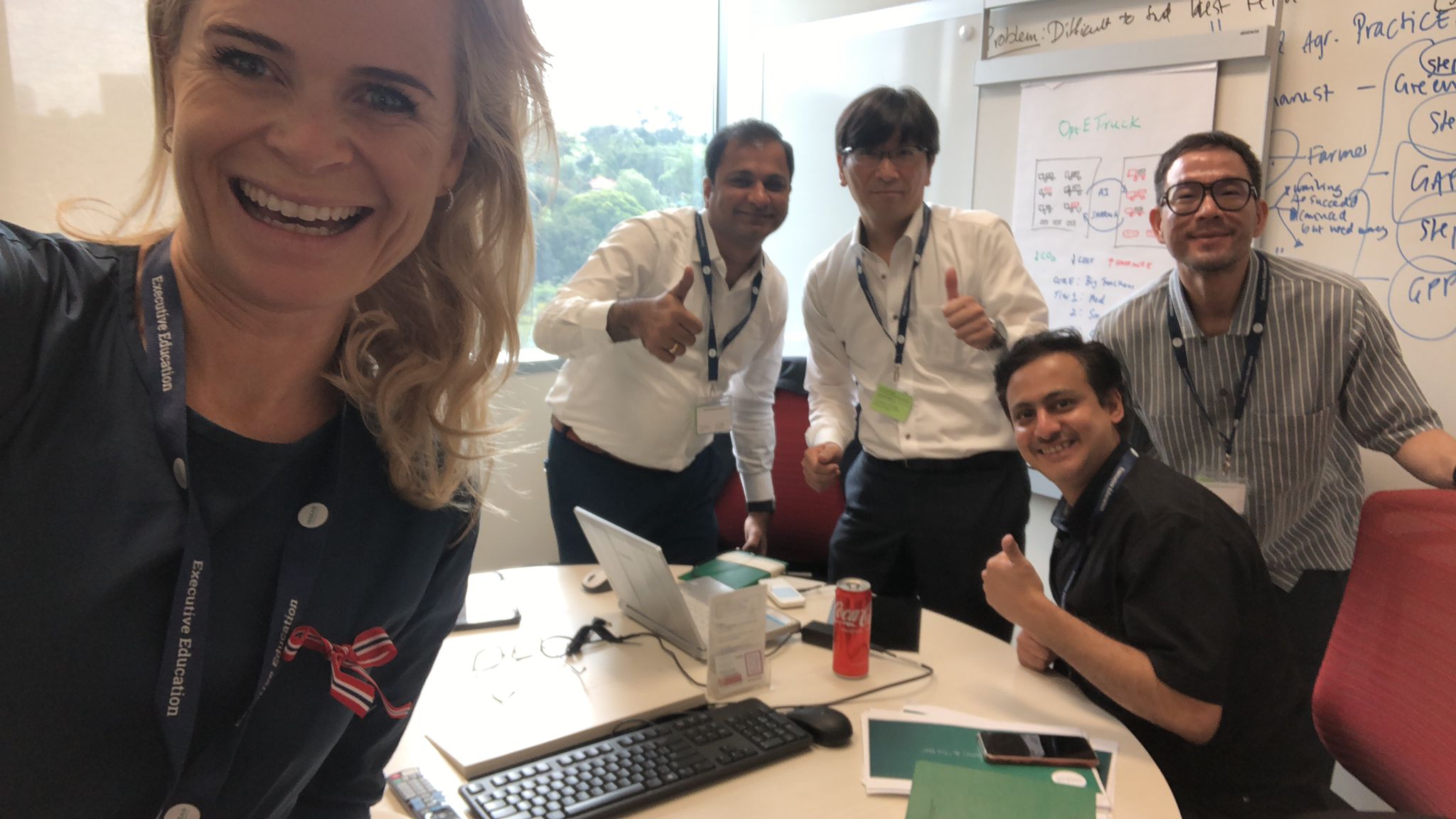
The learning experience was shaped not only by the content, but also by the diversity of the participant group.
“The cohort was very diverse, with participants from different industries and regions. Hearing their perspectives helped broaden how I think about strategy,” he notes.
Classroom discussions, cases and exercises were complemented by open exchanges that challenged assumptions and encouraged reflection.
“The interactions made the learning more practical and relatable.”
A mindset of continuous learning
At its core, the programme reinforced a mindset that Sriram considers essential for senior leaders.
“If you do not try, you never know and learn. Continuous learning helps you stay open-minded and relevant,” he says.
For him, executive education is not just about acquiring tools, but about developing the ability to rethink problems and adapt as contexts evolve.
Who the programme is for
When asked whether he would recommend the Blue Ocean Strategy programme, Sriram is clear.
“I would recommend it to leaders who want to move beyond incremental improvement and rethink how value is created in their organisations.”
His experience reflects a broader leadership challenge. Optimisation sustains performance, but creating new value requires leaders to step back, question assumptions and deliberately reimagine strategy.
Featured Programme

