


In highly regulated and fiercely competitive industries, growth often feels constrained. The rules are fixed, rivals are entrenched, and success is defined by execution efficiency rather than reinvention. For Teo Kai Siang, Director and Regional General Manager at Collins Aerospace, the challenge was not how to compete better, but how to break out of the competitive mindset altogether.
“I was looking for a different way to think about strategy,” he reflects. “Not just how to win within existing boundaries, but how to question those boundaries and create new value.”
That search led him to INSEAD’s Blue Ocean Strategy Programme, a turning point that reshaped how he approaches growth, value creation, and strategic leadership.
Stepping Back to Think Bigger
Based in Asia Pacific, Kai Siang oversees both operational and financial performance across the region, while serving on the Board of Directors for five legal entities, including two joint ventures. His role also involves leading transformation initiatives such as site relocation, expansion, and operations modernisation, responsibilities that demand more than short-term optimisation.
“In senior roles, it is very easy to stay focused on execution and performance,” he says. “But as responsibilities grow, so does the need to step back and think more broadly and strategically.”
He wanted structured time away from day-to-day pressures, not to disengage from reality, but to reframe it.
Choosing INSEAD: Practical, Rigorous, and Relevant
Kai Siang’s choice of INSEAD was driven by both reputation and practicality. “I did some research and spoke with colleagues,” he shares. “INSEAD stood out as a place where the learning is rigorous, relevant, and fits realistically into work and family life.”
Supported by his organisation as part of INSEAD’s Certificate in Global Management, he took a deliberate learning journey, completing Competitive Strategy, Blue Ocean Strategy, and Managing Partnerships and Strategic Alliances, with plans to return for Leading for Results.
“What mattered most to me was that the learning evolved with my role,” he explains. “Even as my responsibilities changed, the content continued to help me think more strategically.”
Why Blue Ocean Strategy Resonated
Operating in the aerospace and defence sector, Kai Siang is acutely aware of how regulation and competition can limit strategic imagination. The Blue Ocean Strategy Programme addressed this challenge directly.
“In a highly regulated and competitive industry like ours, it is easy to assume that meaningful differentiation is no longer possible,” he says. “The programme challenged that assumption.”
Through the Blue Ocean frameworks, he gained clarity on how to systematically challenge industry conventions, look beyond existing customers, and unlock new demand.
“What really stood out was learning the laws of Blue Ocean Strategy and the discipline behind it,” he notes. “It is not about random creativity. It is a structured process for creating new market space.”
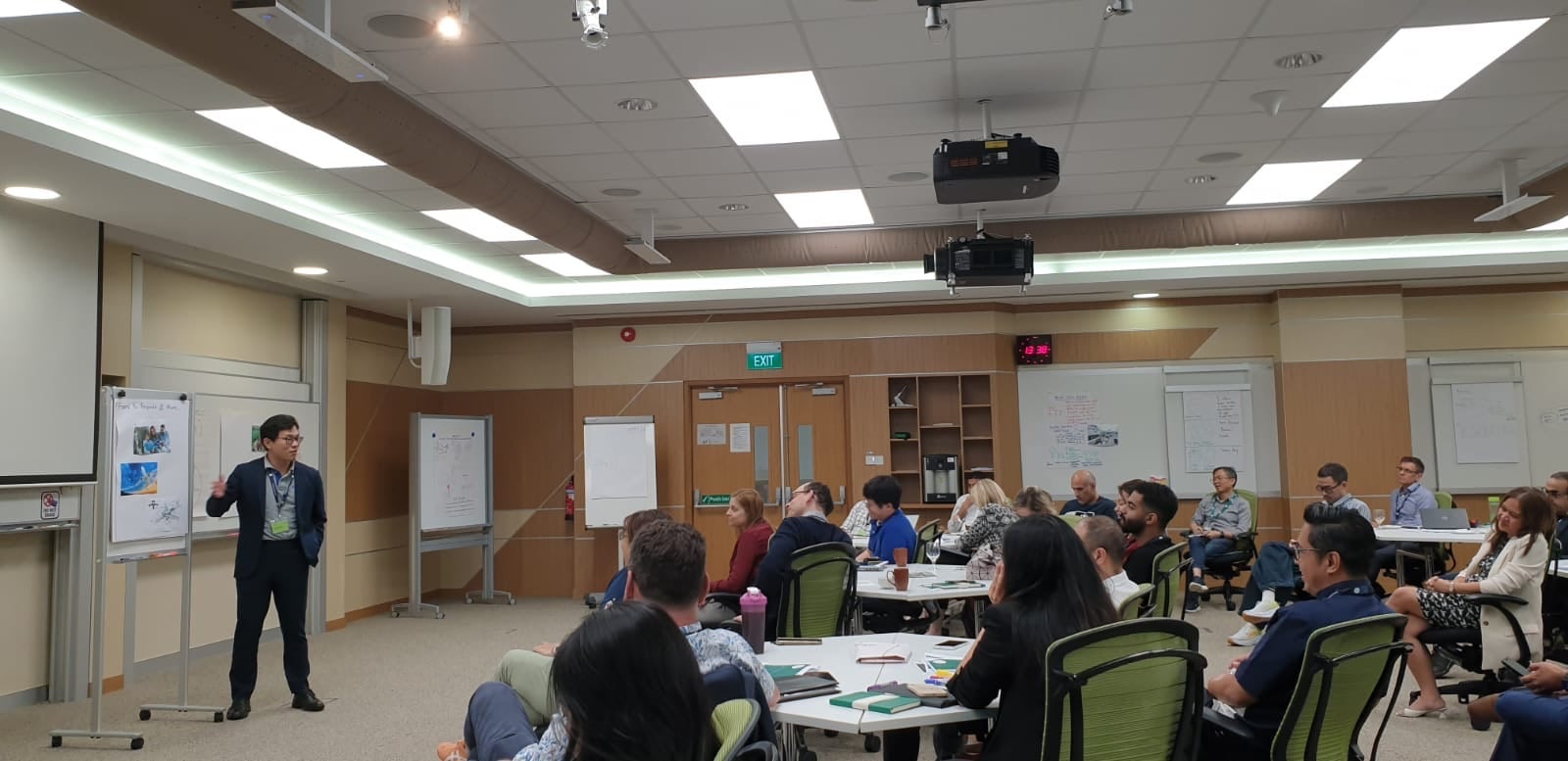
Redefining Value: Beyond Cost or Differentiation
One concept, in particular, reshaped how Kai Siang thinks about strategy: value innovation.
“Blue Ocean Strategy helped me internalise the idea that you do not have to choose between differentiation and low cost,” he explains. “The real breakthrough is increasing customers’ willingness to pay while simultaneously reducing cost through value-based strategy.”
This shift moved strategy from abstract ambition to concrete design choices, deciding what to raise, reduce, eliminate, or create, grounded in customer value rather than competitive benchmarking.
Equally important was the programme’s realism. “One key takeaway was do not outsource your Blue Ocean Strategy,” he adds. “You also need to be very clear about what is practical. You have to own the thinking.”
Strategic Thinking at Board Level
As a board member across multiple entities and joint ventures, Kai Siang sees the value of the programme extending well beyond functional strategy.
“The frameworks help me contribute more meaningfully at board level,” he shares. “They strengthen how I evaluate growth opportunities, risk, and long-term value creation.”
Looking ahead, he is intentionally building towards broader leadership roles across strategy, business development, operations, and programme management. The programme, he says, has become part of how he continues to evolve as a leader.
A Learning Environment That Elevates Thinking
Kai Siang attended the programme at INSEAD’s Singapore campus, which he describes as super convenient and conducive to deep focus. But it was the people that truly elevated the experience.
“The quality of the professors and participants was outstanding,” he says. “The network is genuinely invaluable.”
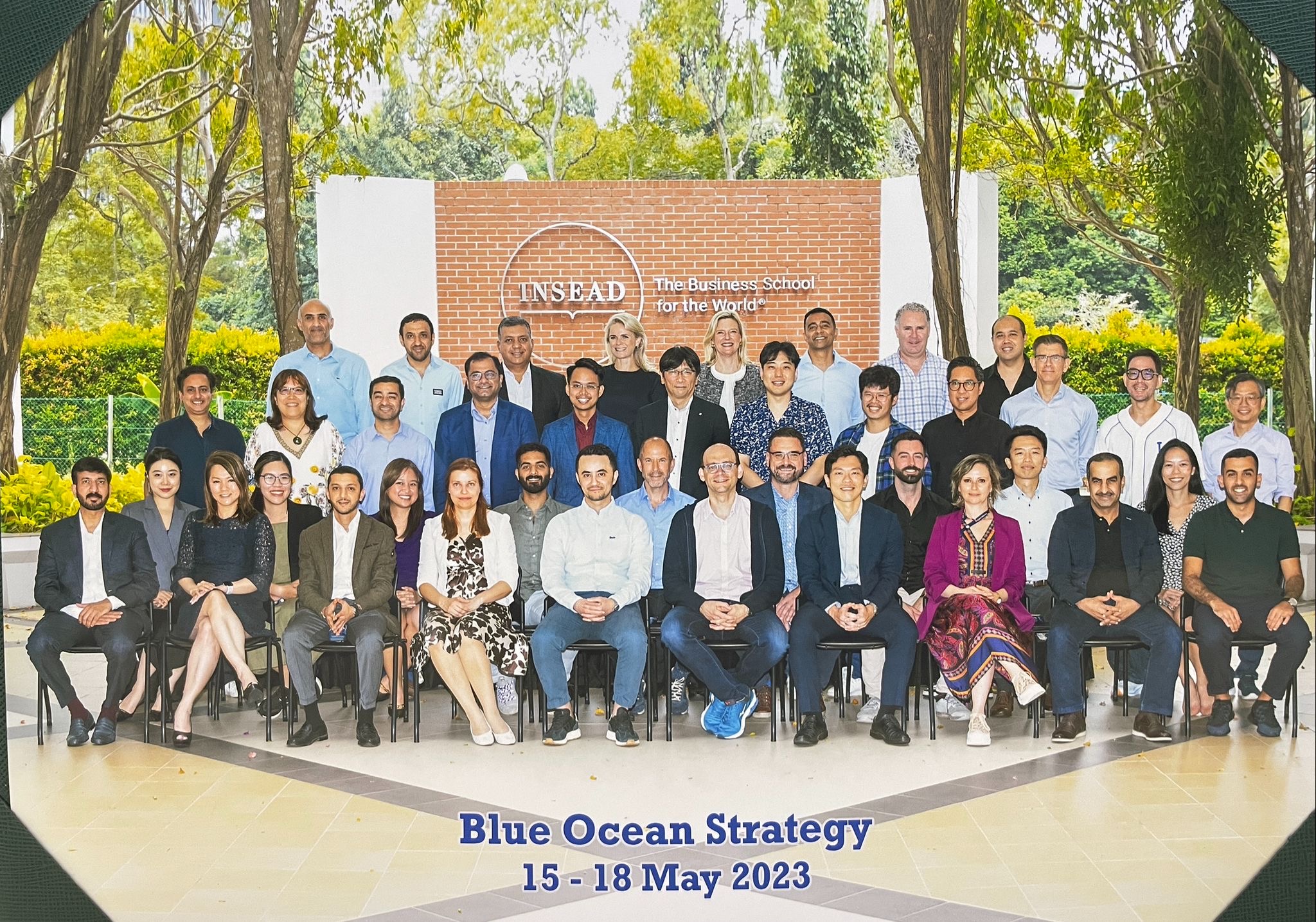
The diverse cohort, spanning industries, geographies, and career stages, enriched classroom discussions and extended learning beyond the programme itself. “We still keep in touch and exchange perspectives,” he adds.
The programme was led by INSEAD faculty Professors Andrew Shipilov and Guoli Chen, whose facilitation helped translate theory into insight and action.
Lifelong Learning as Strategic Discipline
For Kai Siang, executive education is not a one-off milestone. It is a leadership discipline.
“Never stop learning and staying relevant to value add,” he says simply. In an environment defined by complexity and change, that mindset has become essential.
Creating New Growth Beyond Competition
Would he recommend the Blue Ocean Strategy Programme? His answer is unequivocal.
“Definitely. Great content, great professors, and an exceptional group of participants.”
For leaders who feel constrained by competition, regulation, or legacy industry thinking, the programme offers something rare: a structured way to see beyond rivalry, unlock new value, and create growth on your own terms.
Find out more about the Blue Ocean Strategy Programme here.
Featured Programme

